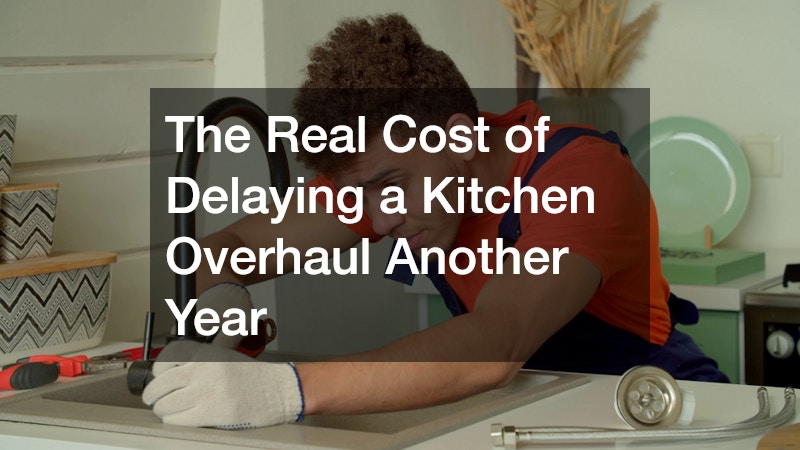
Every year you put off a kitchen renovation, small annoyances have a way of turning into expensive problems. That leaky faucet, outdated wiring, or cracked tile you have been ignoring does not stay static, it quietly gets worse and costs more to fix down the road. Meanwhile, material prices, labor rates, and your own daily frustration with a kitchen that no longer works for your life keep climbing. Understanding the real, dollar-and-cents cost of waiting can help you decide whether this is the year to finally move forward.
Rising Material and Labor Prices Over Time
Construction material costs rarely move in your favor, and kitchens are especially sensitive to this because they combine cabinetry, countertops, flooring, and appliances into one project. Lumber, stone, and imported fixtures have all seen price swings in recent years, and once a supply shortage hits, prices tend to stay elevated even after the shortage passes. Labor costs follow a similar pattern, with skilled tradespeople charging more each year as demand for renovation work increases. Waiting another year rarely means prices will drop back down to where they are today.
This is why getting a quote now, even if you are not ready to start, can be a smart move. A reputable kitchen contractor can walk you through current pricing trends and help you understand how much a delay might actually cost in real terms. Locking in a design and materials list early can also protect you from having to make rushed, budget-driven compromises later.

Hidden Plumbing Problems That Worsen With Age
Kitchens hide a surprising amount of plumbing behind cabinets and under sinks, and small leaks in these areas often go unnoticed until they cause real damage. A slow drip under the sink can rot cabinet bases, warp flooring, and encourage mold growth long before you ever see a puddle on the floor. Because these leaks are tucked out of sight, homeowners often only discover them when they notice a musty smell, a soft spot in the flooring, or a swollen cabinet panel.
The longer a leak continues, the more expensive the repair becomes, since it stops being a simple fix and turns into a reconstruction project. A washer that costs a few dollars to replace today can, left unattended for a year, lead to thousands of dollars in cabinetry, subfloor, and drywall repairs. Mold remediation alone can add significant cost once spores spread into wall cavities, and insurance policies frequently exclude damage caused by “gradual” leaks rather than sudden bursts, leaving homeowners to cover the bill themselves.
Older galvanized or outdated piping is also more prone to corrosion, which increases the odds of a sudden failure. Galvanized pipes typically last 40 to 50 years before internal rust buildup narrows the pipe diameter and weakens joints, and homes built before the 1960s are especially likely to still have this material somewhere in the system. Corrosion doesn’t announce itself gradually in every case — it can fail abruptly, sending water pouring into cabinets and flooring within minutes rather than seeping slowly over months.
Delaying a kitchen overhaul means these hidden risks keep compounding in the background, even if nothing looks wrong on the surface. A renovation gives you the rare chance to open up the walls and cabinet bases, inspect the pipes directly, and replace anything questionable before it becomes an emergency. Waiting another year doesn’t pause that deterioration — it just moves the eventual repair further along the path from “maintenance” to “restoration.”
Pipe Issues
Kitchen pipes hidden behind walls and under sink cabinets don’t announce their problems until it’s often too late. Corroded galvanized supply lines, slow leaks behind the dishwasher, or a slab leak under the flooring can quietly cause rot, mold, and structural damage for years before anyone notices a drip. Waiting another year gives these issues more time to spread, turning what might be a simple pipe swap today into a subfloor replacement tomorrow.
Bringing in local plumbers for an inspection before you commit to a remodel timeline can save you from nasty surprises once walls and cabinets are opened up. A typical pre-remodel inspection runs a few hundred dollars, but it can reveal issues that would cost thousands more to fix mid-project once contractors are already on the clock. Licensed plumbers can also flag outdated shutoff valves, inadequate water pressure, or venting issues that building codes now require to be corrected.
Older kitchens frequently have polybutylene or galvanized piping that’s decades past its expected lifespan, along with drain lines sized for a single sink rather than today’s dishwashers, garbage disposals, and pot fillers. An inspection can catch these mismatches before they cause backups or leaks under a brand-new floor. It’s also the right time to check for proper P-traps and vent stacks, since older setups often don’t meet current code and will need correcting anyway.
Catching these problems early, rather than a year from now, often means a smaller repair bill and fewer delays once construction begins. It also lets you budget accurately from the start, instead of absorbing a surprise mid-project change order that stalls your contractor and stretches your timeline by weeks.
Water Quality Issues Affecting Appliances and Fixtures
Hard water is one of those problems that does damage slowly and silently, coating the inside of pipes, dishwashers, and coffee makers with mineral buildup. Over time, this buildup reduces the efficiency of appliances, shortens their lifespan, and can even affect the taste of drinking water. Many homeowners do not realize how much hard water has degraded their fixtures until they replace them during a renovation and see the difference firsthand. Faucets and finishes coated in years of mineral scale often need to be replaced entirely rather than simply cleaned.
Installing a water softener as part of a kitchen update can meaningfully extend the life of your new appliances and reduce spotting on sinks, glassware, and stainless steel. Homes with particularly hard water may benefit from comparing several water softeners to find one sized correctly for their household usage. Addressing water quality now, rather than after another year of mineral buildup, protects the investment you are about to make in new fixtures and appliances.

Outdated Countertops and Surfaces That Keep Depreciating
Countertops take more daily abuse than almost any other surface in the home, from hot pans to knife nicks to spilled wine, and that wear compounds year after year. Natural stone surfaces in particular can develop etching, dulling, and staining that becomes harder to reverse the longer it is left untreated. What could have been a manageable polishing job a year ago may require more intensive intervention now. Homeowners often underestimate how much a worn countertop drags down the overall look of a kitchen, even when everything else is updated.
If your existing stone surfaces still have good bones, a marble restoration company may be able to revive them for a fraction of the cost of full replacement, buying you time or complementing a partial remodel. Restoration specialists can also advise honestly on whether a surface has degraded past the point of saving. Getting this evaluation sooner rather than later gives you more options and typically a lower price tag.
Flooring and Backsplash Wear That Accumulates Quietly
Kitchen flooring endures constant foot traffic, moisture, and dropped items, and cheap or aging materials show that wear faster than people expect. Cracked grout lines and chipped edges are not just cosmetic, they can let moisture seep beneath the surface and cause subfloor damage that is far more expensive to repair than the original flooring. Backsplashes suffer similarly, absorbing grease and steam that can eventually stain grout permanently if not addressed.
Replacing tile sooner rather than later can prevent this kind of underlying damage while also refreshing the overall look of the space. Newer tile options also offer improved durability, easier cleaning, and better slip resistance than many products available even five or ten years ago. Waiting another year means living with an increasingly worn surface while the moisture-related risks underneath continue to build.

Color and Finish Choices That Feel Increasingly Dated
Paint colors and cabinet finishes go through style cycles, and a kitchen that felt fresh a decade ago can start to feel noticeably dated even if nothing is structurally wrong with it. This matters not just for your daily enjoyment of the space but also for resale value, since buyers often mentally deduct money for kitchens that look stuck in a previous era. A simple color refresh can sometimes buy a few more years of life for a kitchen that is not ready for a full renovation.
A trip to a local paint store can help you test updated neutral tones or trending cabinet colors before committing to a larger project. Many stores also offer color consultation services that can pair well with a broader design plan. This smaller investment now can make the space feel more current while you plan and budget for bigger changes.
Lost Enjoyment and Everyday Frustration in the Space
It is easy to focus purely on financial costs, but there is a real quality-of-life cost to living in a kitchen that no longer serves your needs. Cramped counter space, insufficient storage, and poor lighting make everyday cooking and entertaining more stressful than they need to be. Families often adjust their habits around a dysfunctional kitchen without realizing how much friction it adds to daily routines.
A well-planned kitchen design service can identify layout inefficiencies you may not have noticed, such as poor workflow between the sink, stove, and refrigerator. Small layout changes, informed by professional input, can dramatically improve how the space functions without necessarily requiring a full gut renovation. The longer you wait, the longer you continue absorbing that daily frustration rather than solving it.

Structural and Code Compliance Issues That Grow More Complex
Older kitchens sometimes have wiring, ventilation, or structural elements that no longer meet current building codes, and these issues do not resolve themselves with time. A kitchen wired in the 1970s or 80s, for example, may rely on a 60-amp panel or ungrounded outlets that simply weren’t designed to handle a modern refrigerator, microwave, dishwasher, and air fryer running at once. Outdated electrical panels struggling to support these loads can become a genuine safety hazard, not just an inconvenience, with overloaded circuits and worn insulation raising real fire risks.
Ventilation is another area that quietly falls out of compliance. Older range hoods often vent poorly or not at all to the exterior, allowing grease, moisture, and combustion byproducts to build up in ways that current codes specifically try to prevent. Structural issues, like load-bearing walls altered during a prior DIY renovation or sagging floor joists under heavy cabinetry, can also go unnoticed for years until an inspector or contractor flags them.
Ensure Licensing
Bringing in a licensed remodeling contractor to assess the space early can help you understand which issues are cosmetic and which are safety-related, allowing you to prioritize accordingly. This kind of early evaluation often catches problems like insufficient load-bearing support for an island, improper venting for gas appliances, or clearances that no longer meet current fire codes. Catching these issues on your own timeline, rather than during a home sale inspection, gives you room to budget and plan rather than scramble.
A qualified remodeling contractor can also coordinate the various trades needed to bring a kitchen up to current code, from electrical to structural framing. That might mean looping in an electrician to replace a 60-amp panel with a 100-amp or 200-amp service, or bringing in a structural engineer to evaluate a wall before it’s removed. Trying to manage these specialists independently often leads to costly miscommunication and rework.
The true cost of delaying a kitchen overhaul is rarely just about the price tag on cabinets or countertops, it is the compounding effect of rising prices, worsening wear, and lost enjoyment of your home. Every additional year adds a little more to the eventual bill while giving you one less year to actually enjoy the improved space. If your kitchen has been on your mind for a while, use this information to start gathering quotes and professional opinions now rather than waiting for another year to pass. Taking that first step today puts you back in control of the timeline and the budget, instead of letting deferred maintenance make those decisions for you.